Filter by topic and date
Welcome to Prague!
- Jari Arkko IETF Chair
17 Jul 2015
The IETF is once again in Prague! The city is clearly one of our favourites, given that we’ve been there also in 2007 and 2011.
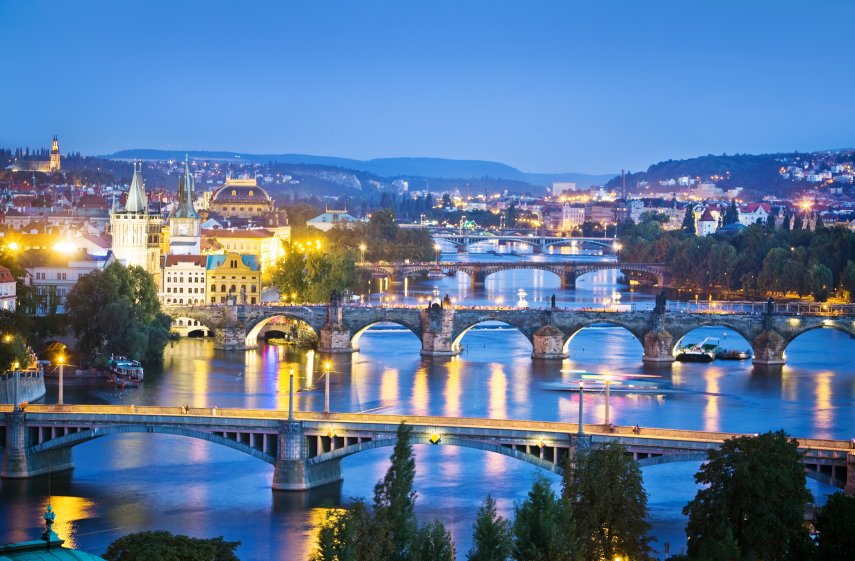
The hotel works well for us. And the many nearby restaurants and bars provide a setting for those side discussions that are so often the beginnings of new Internet technology developments. Our meetings in Europe often end up drawing good crowd, and it is looking to be the case also for this IETF as we are predicting over 1300 participants.
I wanted to remind everyone that these meetings wouldn’t be possible without the support of our sponsors. I want to thank our hosts CZ.NIC and Brocade, our connectivity sponsor Dial Telecom, the Bits-n-Bites sponsors, and our IETF Hackathon sponsor Cisco.
Speaking of the Bits-n-Bites, we have 11 different organisations demonstrating their work: A10 Networks, Brocade, CESNET, Comcast, CZ.NIC, Huawei, Nephelion, NetDEF, OPNFV, and RITE. I find the many open source projects (Liberouter from CESNET, OpenSourceRouting from NetDEF, and of course, OPNFV) particularly interesting.
The other event that is certainly well-attended is the IETF Hackathon, with 119 people registered. This means that a big fraction of the people coming to the IETF will be working with others in building running code, bridging the open source and standards worlds together, and most likely coming up with many new ideas. I’m looking forward to this!
The Internet Architecture Board will run a technical plenary on Tuesday to talk about vehicular networking. Having just recently started hacking my own car, I look forward to that discussion as well. By the way, if you are not on site, you can still follow the meetings remotely. The plenary will be streamed live at http://www.ietf.org/live.
I also want to highlight the Thursday lunchtime speaker series, with Dave Meyer talking about machine learning this time. Join the session to find out how this topic is related to networking!
I will also note a couple of my personal favourite items from our regular meeting agenda:
- The EDUNEXT BOF session will talk about ways we at the IETF should transform our newcomer and educational activities. Should we turn the in-person tutorials to short videos, for instance?
- Deterministic networking is discussed in the DETNET BOF session on Monday. Could we support very high-speed and critical communications in non-best-effort ways?
- The CAPPORT BOF session on Wednesday discusses whether the IETF could design new technology to better deal with WiFi login pages.
- The DTN WG session on Wednesday continues the work to standardise a transport protocol for intermittently connected systems. This work is based on earlier research effort form the DTN RG.
- The GAIA RG session discusses experiences around Internet access throughout the world, incl. developing areas. This important session will also be on Wednesday.
- The HOPS RG session on Friday will discuss how ossified the Internet protocol stack is or is not, with regards to technology evolution.
But since we have 128 working groups, I will stop here and let everyone tune into their favourite topics on the agenda. See you soon, in person or remotely!
You may also notice that the IETF agenda looks a bit different this time. We are experimenting with moving the plenaries to mornings in an effort to reduce the impacts of room configuration changes from the plenary to WG sessions. The morning plenaries will allow the changeover to happen over lunch. As noted, the technical plenary is on Tuesday and the administrative plenary on Thursday. Let us know how well the new agenda works for you, and we’ll see whether to continue with this in the future.
Also, another observation of our agenda is that we had trouble fitting all meeting requests into the available slots. This is a sign of people wanting to work on interesting projects, so great! The overflow could of course solved in the future with more parallel meetings, but couldn’t be done without accepting more conflicts between meetings, as many of you are working on many important projects at the same time. If anyone has thoughts on how to address this in our meeting format, let us know!